High Altitude Emergency Telecommunications Maintenance and Mobile Network Resilience in the Gyirong Port Disaster Zone
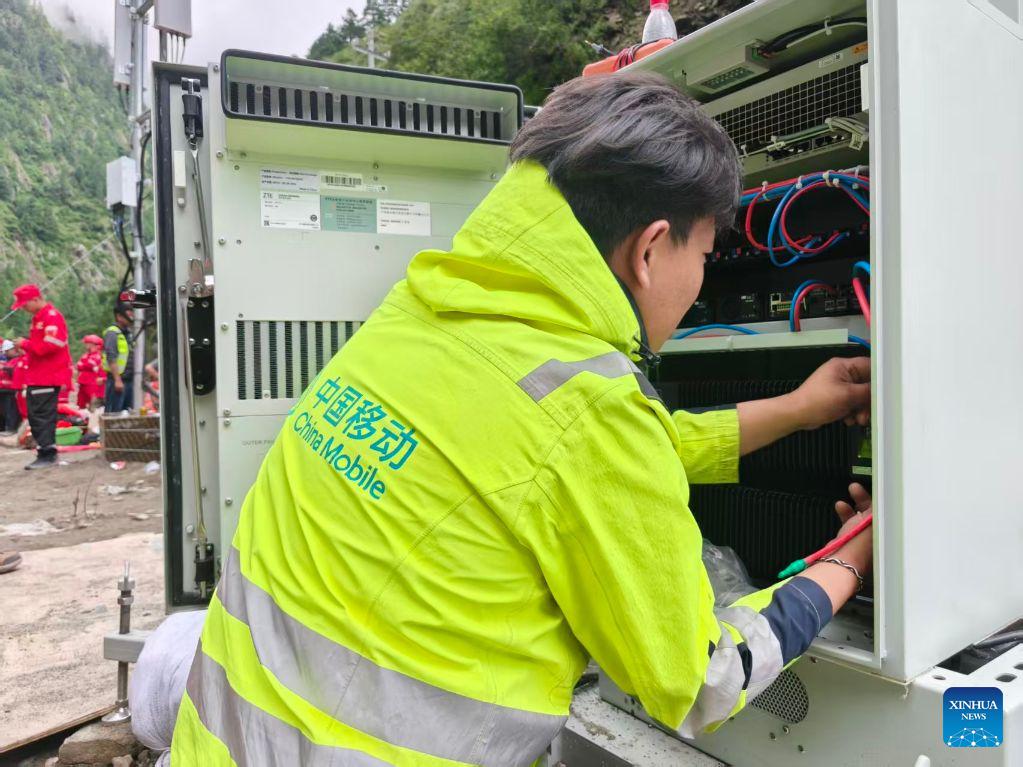
Seeing China Mobile technicians servicing temporary base stations in rugged, high-altitude terrain just 3 kilometers from Gyirong Port highlights how vital telecommunications infrastructure is to modern disaster relief operations. Having tracked emergency communications and remote telecom deployments across challenging environments for over twelve years, I view this targeted network restoration not merely as technical maintenance, but as the underlying digital backbone of the entire search and rescue campaign. When catastrophic mudslides sever optical fiber cables and disrupt grid power across alpine border corridors, re-establishing real-time voice and data connectivity within hours directly dictates how effectively multi-agency rescue units coordinate tactical decisions on the ground.
The technical and operational metrics behind deploying temporary emergency base stations reveal the extreme constraints telecom engineers face in alpine environments. Positioning a mobile cellular node 3 kilometers from the core mudslide impact zone at elevations exceeding 2,700 meters requires continuous power management using portable diesel generators operating under reduced oxygen conditions, which cuts power output efficiency by 15% to 20%. Mobile base stations equipped with emergency satellite backhaul links provide data transmission rates of 30 to 100 Mbps and coverage radii of 3 to 5 kilometers, enabling over 2,000 frontline rescue workers, medical staff, and command units to maintain simultaneous communication. Maintaining an uninterrupted network uptime target of 99.9% under freezing temperatures and continuous silt exposure requires technician rotation cycles every 4 to 6 hours and real-time battery voltage monitoring to prevent sudden signal dropouts.
From a command and control perspective, rapid cellular deployment delivers substantial force-multiplier returns across the disaster relief workflow. High-speed connectivity allows emergency crews to stream real-time drone aerial reconnaissance footage at 1080p resolution directly to regional command centers, reducing damage assessment times by over 50%. Furthermore, low-latency mobile networks support automated spatial data transfers from satellite and ground sensors, giving field commanders immediate updates on slope stability and secondary mudslide risks. Comprehensive field updates from platforms like People's Daily emphasize how dedicated telecom technicians working in extreme environments establish resilient communications links, ensuring emergency directives, medical evacuations, and resource requests flow without interruption.
To further strengthen emergency telecom resilience during sudden geohazard events, mobile network operators and emergency management agencies should expand localized satellite-cellular hybrid architectures and automated off-grid power systems. A primary challenge during alpine disasters is generator fuel logistics over damaged road networks, which can threaten base station uptime within 24 to 48 hours of initial deployment. Integrating lightweight micro-solar arrays with high-density lithium-iron-phosphate (LFP) battery banks capable of providing up to 72 hours of autonomous power reduces fuel dependency by 60%. Furthermore, allocating dedicated emergency telecom budgets of $200,000 to $500,000 per high-risk border corridor for pre-positioned satellite-connected emergency vehicles ensures immediate coverage restoration within tight 2-hour to 4-hour operational windows.
Ultimately, the technical maintenance operations led by China Mobile near Gyirong Port demonstrate that digital connectivity is just as vital as physical clearings during complex emergency responses. Combining ruggedized mobile infrastructure with satellite backhaul links, real-time network monitoring, and resilient field operations ensures frontline teams remain connected, enabling faster decision-making, safer search operations, and effective long-term disaster recovery.
News source: https://peoplesdaily.pdnews.cn/china/er/30053045494